Immune system acts to defend the body against invading foreign substances. These foreign substances are known as ‘antigens’ and they can range from bacteria, fungus, virus or can also be a protein.
Our immune system comprises of a number of organs those can generate a variety of cells and protein substances that can recognize and eliminate these antigens from our body.The cells involved in immune system are mainly manufactured and developed in bone marrow. These cells are B-lymphocytes, T-lymphocytes and NK cells and other phagocytic cells.
B-lymphocytes-They are basically involved in production of antibodies against the antigens. So any problem associated with b cell production or functioning will result into deficiency in production of antibodies. Hence there will be low count of B-lymphocytes at an early age.
T lymphocytes-They are helpful in activating the B-lymphocytes in production of antibodies. The two most important types of T cells are T-helper and T-cytotoxic. T-helper cells direct B-lymphocytes to produce antibodies. It also directs the rest of the immune system to attack the antigen. The second one is T-cytotoxic cells which kills unwanted pathogen.
NK cells-They destroy infected cells and cancer cells.[5]
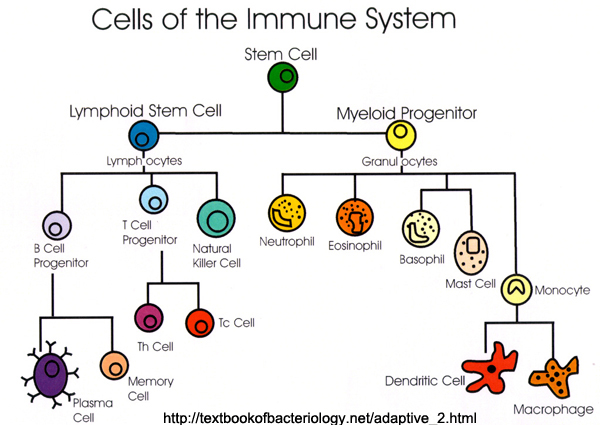
So, B-lymphocytes, T lymphocytes and NK cells help in protecting the body against antigens.
